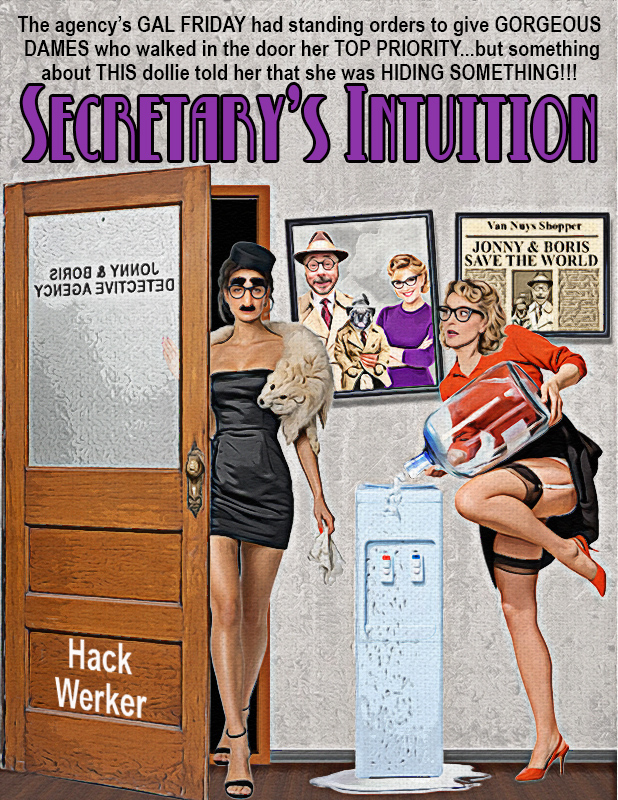
Van Nuys was a sewer with streetlights—only difference was the sewer didn’t pretend to be anything else. Jonny and Boris trusted exactly three things in that town: each other, the cruel certainty that tomorrow would be worse than today, and Rosie.
Rosie had been holding down the front office for six months, ever since Boris waved the white flag and admitted he couldn’t juggle case files and coffee orders at the same time. They’d nearly given up on finding help when she blew in like a Jersey hurricane—brassy, blonde, and talking like she wrote the rules of the universe in her spare time. Trouble was, she usually did. Half a year later, the joint ran like a watch, and the boys didn’t ask questions. They gave her free rein with one standing order carved in stone: any gorgeous dame looking for help jumped the line. No exceptions.
Rosie didn’t argue. She’d taken to the boys like a mother hen with two particularly dim chicks. So when Jonny and Boris hopped a train east to dig into the murder of one Robert Vestal, Rosie stayed behind to mind the nest—and the door.
That’s when she walked in.
The brunette.
The kind of face that made trouble look like a good idea.
She wore a Groucho Marx getup—fake nose, bushy brows, the works—but it didn’t hide much. Especially not the kind of figure that made honest men consider a career change. Rosie gave her one long look, then went straight to business, fingers already rattling the typewriter keys like gunfire.
“Name?” she asked.
“Wonderly,” the dame said, voice soft enough to make lies sound like lullabies.
And then she sang.
A sister gone missing. A bad hombre named Floyd Thursby. Dark alleys, darker intentions, and just enough fear in her voice to grease the wheels. Rosie kept typing, eyes sharp, not buying a ticket but enjoying the show.
When the story ran dry, Rosie yanked the paper free, smooth as a card shark dealing the ace.
“Two-fifty a day, plus expenses,” she said. “One week in advance.”
Miss Wonderly didn’t blink. She peeled off the cash like she’d done it before—too many times. Rosie took it, locked it away, and slid the contract across the desk.
The brunette reached for a pen.
Rosie stopped her with a look that could crack glass.
“Do me a favor, sister,” she said, voice sweet but lined with steel. “Sign your real name. Saves me the trouble of retyping when the truth finally shows up.”
The dame hesitated.
Rosie leaned back, folding her arms.
“And while you’re at it,” she added, “ditch the comedy mask and tell me why you’re REALLY here. Because when my boys walk through that door tomorrow, I don’t like sending ’em chasing ghosts.”