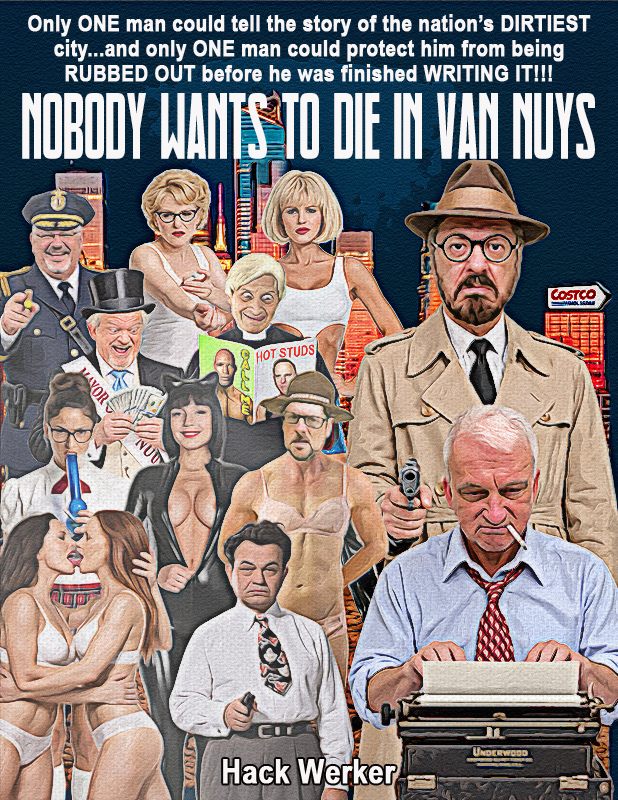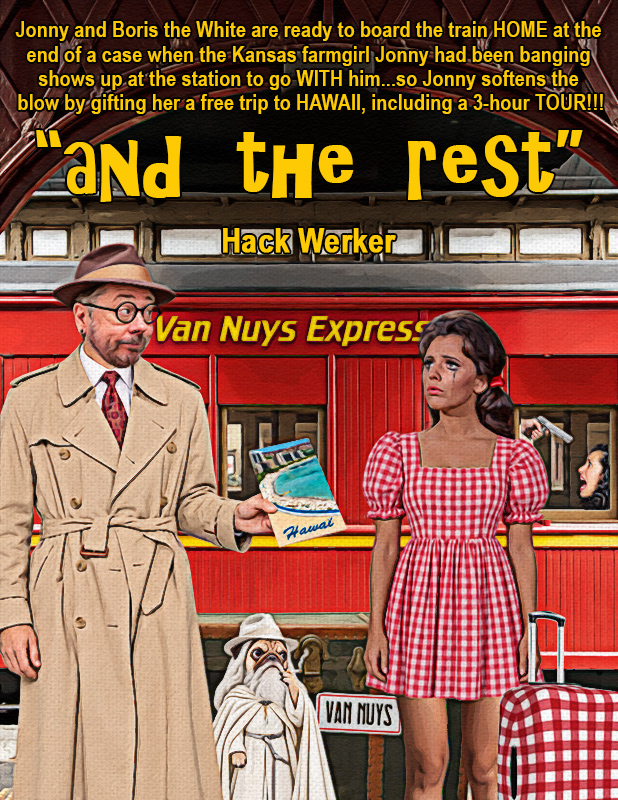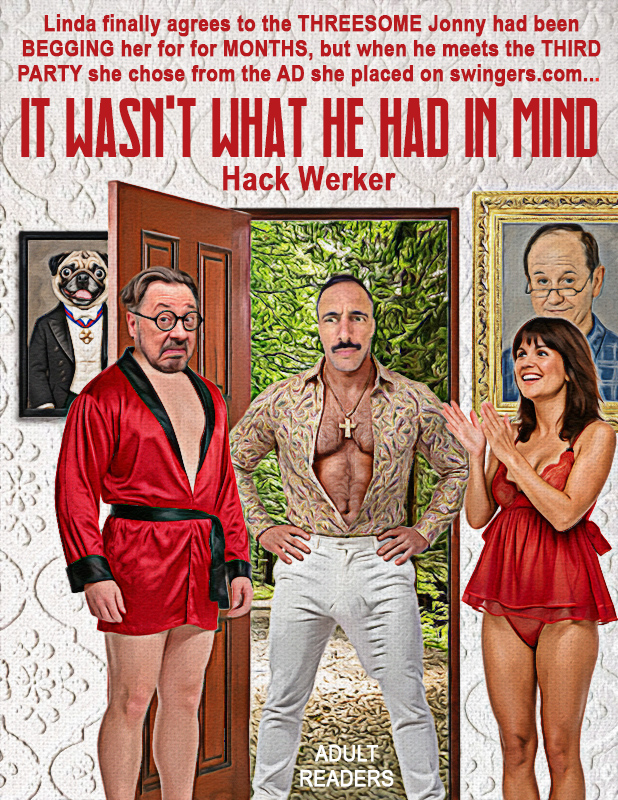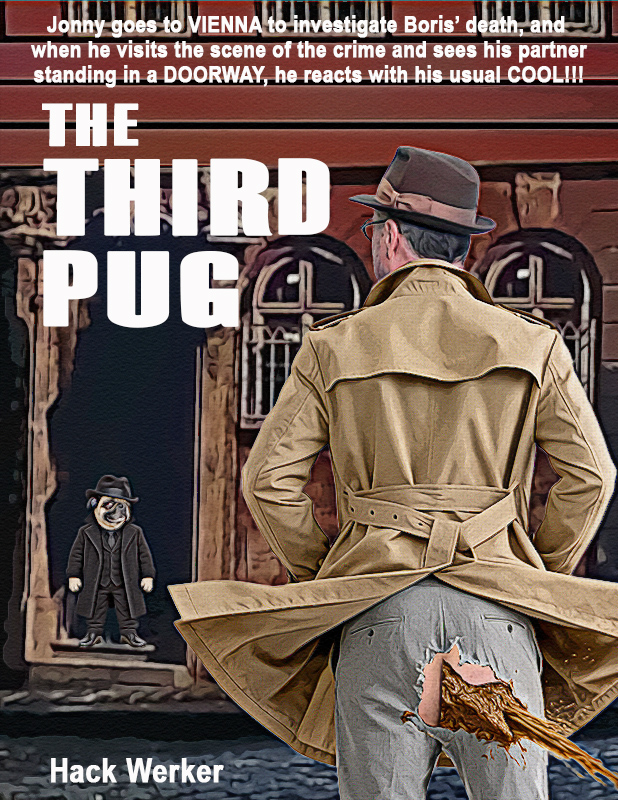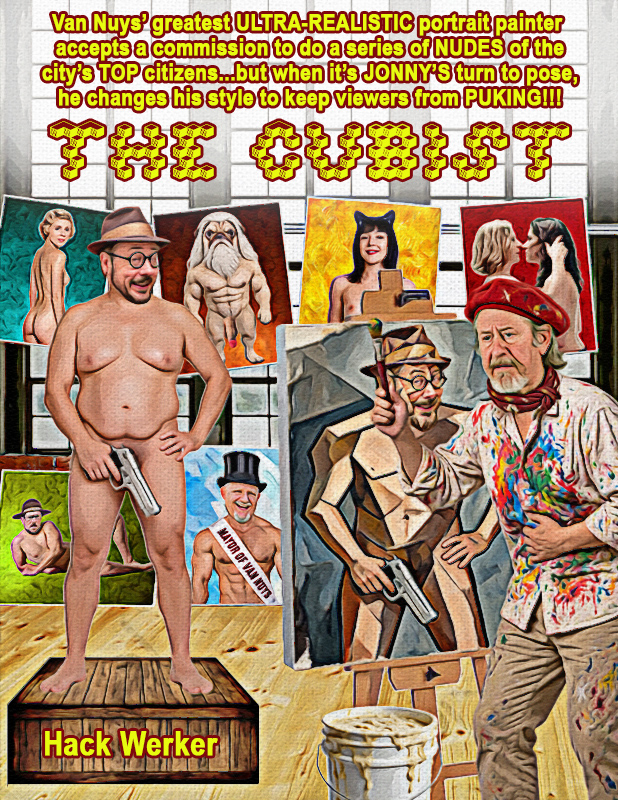
The Dressers

The highbrow crowd in Van Nuys—fur coats draped over hollow hearts—had already written Jehoshaphat Merlin’s obituary in permanent ink. Eighty-three years old, a bullet lodged in his skull, he’d gone down mid-soliloquy while playing Romeo like time had forgotten him. It should’ve been a perfect curtain call. But death took one look at Merlin and passed. The old tragedian clawed his way back, and when Jonny and Boris dragged his longtime dresser Robert Vestal, his would-be killer, to the noose, Merlin repaid the favor the only way he knew how—by announcing another farewell. King Lear, Van Nuys Performing Arts Center, World Theater Day. The faithful few came crawling back, clinging to the myth like it might still breathe.

Jonny and Boris didn’t trust the invitation, but they took it anyway. They figured maybe the old buzzard had discovered gratitude in his second life—maybe a handshake, maybe a couple of comp tickets if the planets lined up just right. Instead, they got Merlin in his dressing room, marinating in greasepaint and ego, wrapped in velvet like a relic that refused to stay buried. His voice rolled out in that baritone of his, stretching words until they nearly snapped. A “luminary” like him, he said, needed protection in a cesspool like Van Nuys. Since Vestal swung, he couldn’t keep a dresser longer than a fortnight. So he offered the detectives a job—valets and bodyguards, no extra pay, no gratitude, no illusions.

Boris gave it a moment, head tilted, the way he did when he was trying to find the upside in a bad deal. He said it might be worth a shot—two weeks in show business, keeping an eye on a company that had been taking potshots at its leading man all tour long. Merlin didn’t like the tone. Said he was a harsh master, the kind that broke men and called it discipline. Seventy years serving Shakespeare, and no one had ever met his standards. Then he lowered the boom, voice turning soft and deadly. He promised them one thing: after two weeks in his employ, the two miserable souls who despised him most in the entire company would be Jonny and Boris.

In Van Nuys, that wasn’t a warning. It was prophecy.

The Grand Slam Scam

In Van Nuys, power wasn’t measured in money or muscle—it was measured in how fast you could get a booth at the Denny’s on Sherman Way. The city’s two-bit kings and third-rate royalty waited months for a shot at those cracked vinyl seats with a view of the flickering Van Nuys Drive-In sign next door. Even Snow Mercy—top trigger for the mob and the kind of dame that made traffic forget where it was going—could only muscle her way in twice a month. That changed when she latched onto a name that opened doors like a skeleton key: Thurston Howell VII, heir to the fabulous Lovey Howell fortune. After that, she was ringside every night, carving into a Moon Over My Hammy within earshot of the legendary wits of the Denny’s round table—Bro Joe, Robin Greenspan,  and the rest of the breakfast intelligentsia—firing off wisecracks like they were getting paid by the syllable.

Howell. You read that right. Old money, deep pockets, and the kind of pull that made waitlists disappear. He hired Snow to ice Robert Vestal when Vestal got cute and tried to take a bite out of Howell Industries. Snow did what she always did—clean, quiet, no witnesses but the ghosts. Then Howell tells her to celebrate. Brunch. Same place. Same day. In Van Nuys, that’s like asking for sunshine at midnight. But thirty minutes later, there she was, elbows on the table, staring down a Grand Slam like it owed her money. That’s when she knew—this guy wasn’t just connected. He was magic.

Only magic’s a funny thing in this town. Turns out the real Thurston Howell VII was cooling his heels under house arrest in a Glendale villa, wrapped up in a sweetheart deal with the Feds. The guy Snow was splitting pancakes with? A ghost with a badge. A federal suit wearing Howell’s name like a rented tux, dipping into his bank account and his social circle to get close—real close—to the deadliest woman in the Valley. Close enough to map the underworld, piece by piece, until there was nowhere left for it to hide.

It took a special kind of agent with the guts, charm and finger trigger to sell a ticket to the high wire act he was attempting, and he needed a special kind of partner running the box office.

Jonny M. and Boris, your audience is ready for the show.

Bad Hair Day

This novel was inspired by a 1946 movie called Lady in the Lake, in which the action unfolds entirely through the camera, which represents the eyes of detective Philip Marlowe voiced by actor Robert Montgomery (whose face is only shown in once scene where Marlowe is looking in a mirror). Hack was watching the movie when Jonny came in with a new haircut which his barber cut 1/16th of an inch too short, so it stood up like the Bride of Frankenstein.

We told Hack that the gimmick would never work in a novel, since it lacked the visual component of a movie, and he gave up on it two-thirds of the way through, devoting the last 75 pages t0 yet another rambling account of his abusive father. But his publisher needed a new Hack Werker book so he just had Hack expand the anal sex scenes in chapters 6 and 14, and it wound up selling well in the Bible Belt.

Secretary’s Intuition

Van Nuys was a sewer with streetlights—only difference was the sewer didn’t pretend to be anything else. Jonny and Boris trusted exactly three things in that town: each other, the cruel certainty that tomorrow would be worse than today, and Rosie.

Rosie had been holding down the front office for six months, ever since Boris waved the white flag and admitted he couldn’t juggle case files and coffee orders at the same time. They’d nearly given up on finding help when she blew in like a Jersey hurricane—brassy, blonde, and talking like she wrote the rules of the universe in her spare time. Trouble was, she usually did. Half a year later, the joint ran like a watch, and the boys didn’t ask questions. They gave her free rein with one standing order carved in stone: any gorgeous dame looking for help jumped the line. No exceptions.

Rosie didn’t argue. She’d taken to the boys like a mother hen with two particularly dim chicks. So when Jonny and Boris hopped a train east to dig into the murder of one Robert Vestal, Rosie stayed behind to mind the nest—and the door.

That’s when she walked in.

The brunette.

The kind of face that made trouble look like a good idea.

She wore a Groucho Marx getup—fake nose, bushy brows, the works—but it didn’t hide much. Especially not the kind of figure that made honest men consider a career change. Rosie gave her one long look, then went straight to business, fingers already rattling the typewriter keys like gunfire.

“Name?” she asked.

“Wonderly,” the dame said, voice soft enough to make lies sound like lullabies.

And then she sang.

A sister gone missing. A bad hombre named Floyd Thursby. Dark alleys, darker intentions, and just enough fear in her voice to grease the wheels. Rosie kept typing, eyes sharp, not buying a ticket but enjoying the show.

When the story ran dry, Rosie yanked the paper free, smooth as a card shark dealing the ace.

“Two-fifty a day, plus expenses,” she said. “One week in advance.”

Miss Wonderly didn’t blink. She peeled off the cash like she’d done it before—too many times. Rosie took it, locked it away, and slid the contract across the desk.

The brunette reached for a pen.

Rosie stopped her with a look that could crack glass.

“Do me a favor, sister,” she said, voice sweet but lined with steel. “Sign your real name. Saves me the trouble of retyping when the truth finally shows up.”

The dame hesitated.

Rosie leaned back, folding her arms.

“And while you’re at it,” she added, “ditch the comedy mask and tell me why you’re REALLY here. Because when my boys walk through that door tomorrow, I don’t like sending ’em chasing ghosts.”