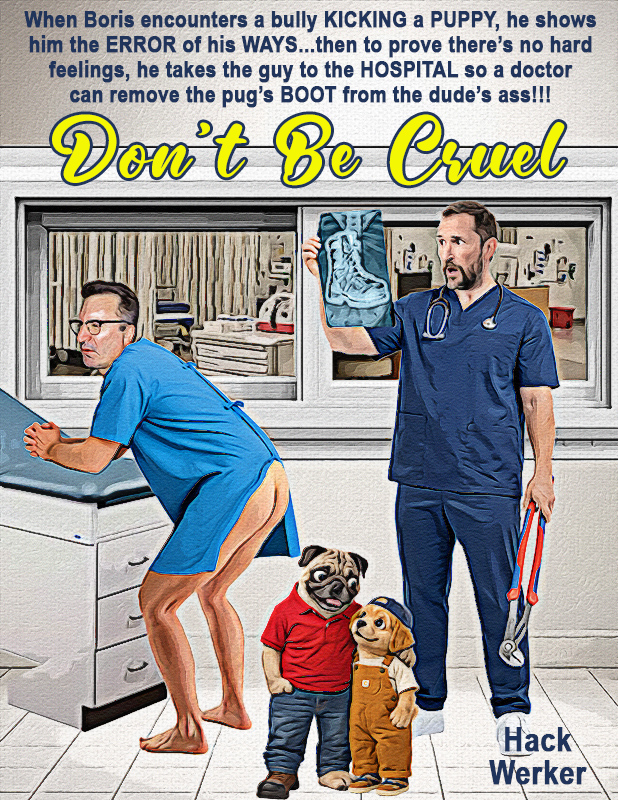
Happy American Society For the Prevention of Cruelty to Animals Day!
The website of the greatest pulp fiction writer who ever lived
Happy American Society For the Prevention of Cruelty to Animals Day!
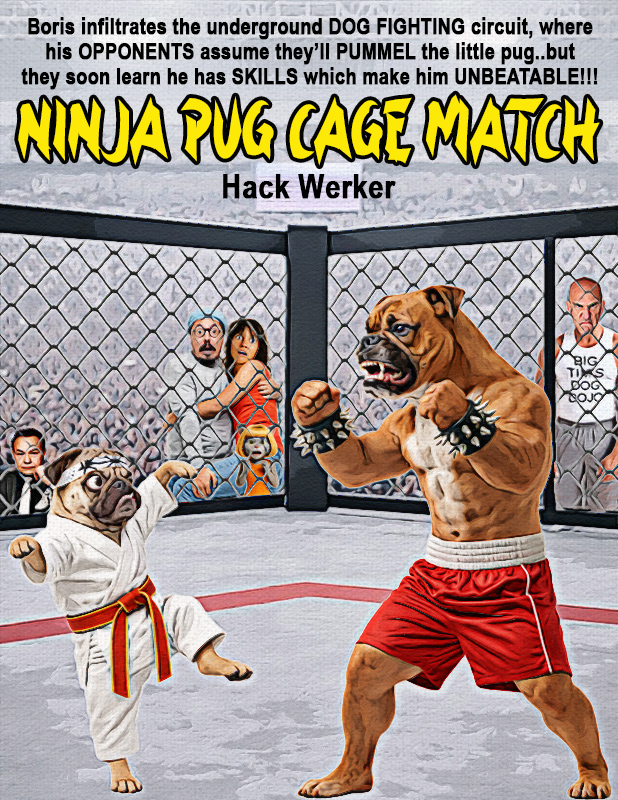
Happy National Dog Fighting Awareness Day!
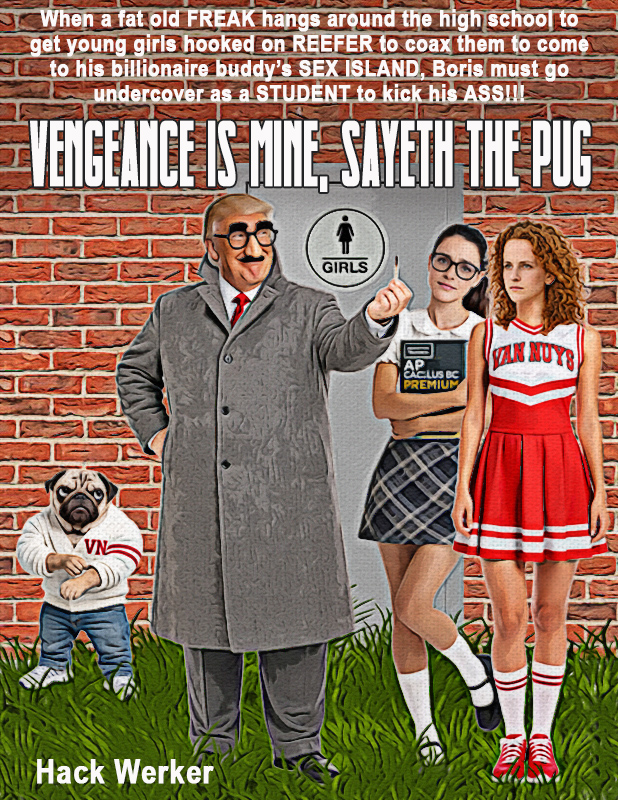
Happy Weed Appreciation Day! And above all else, never forget that Trump is in the Epstein Files!!!
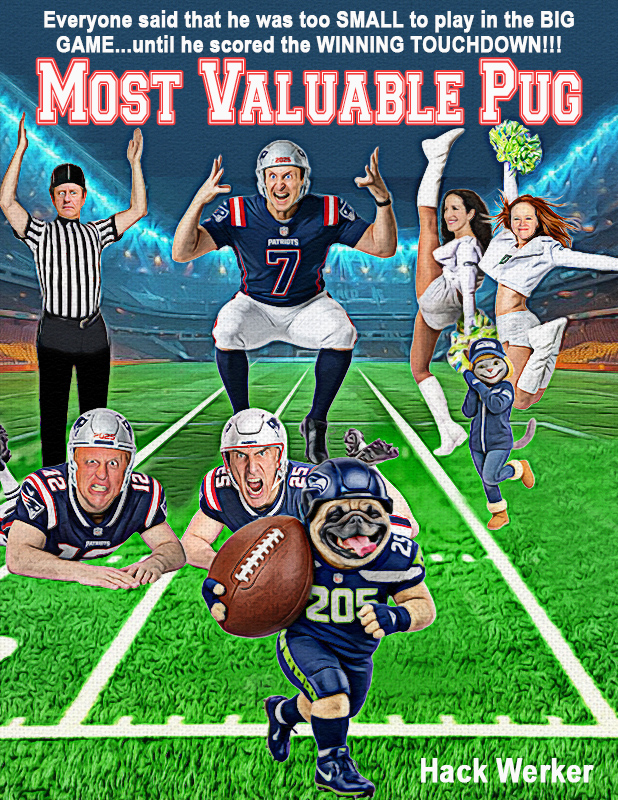
The Seahawks’ locker room had the feel of a morgue ten minutes before the toe met the leather. Steam curled off the showers like cigarette smoke in a bad dream, and every man in uniform wore the same long face. The word had come down that morning like a body off a bridge: Glenn Simon, their All-Star wide receiver, had been pancaked in a freak Zamboni mishap. One minute he was the king of the end zone, the next he was a smear on the ice. Morale went with him.
Coach Mike Macdonald paced the tile like a priest with no faith left. He tried to sell hope the way a bookie sells sure things. “I know you think nobody replaces Glenn,” he said, voice echoing off the lockers. “But I know one guy who can.”
That’s when they noticed the stranger. Quiet. Small. Already pulling on pads at Simon’s locker like he owned the place. Fawn-colored fur. Short legs. Cold eyes that had seen worse things than a fourth quarter blitz. Boris Pug.
The room went dead silent until quarterback Sam Darnold let out a laugh sharp enough to cut glass. “You’ve gotta be kidding me,” he sneered. “Simon was a stone-cold killer. That mutt’ll be a grease spot before the—”
He never finished. Boris moved. One second he was a dog in a jersey, the next he had Darnold folded up in a ninja death grip that looked like it had been outlawed in three countries. The air left the quarterback’s lungs in a wet cough. Boris eased off just before the man’s windpipe gave up the ghost and let him crumple to the floor like a losing hand.
“I was trained by the Korean Dark Lords of Justice,” Boris said softly, straightening his pads. “I think I can handle your little game.”
Nobody said a word after that. Boris went back to suiting up. The players exchanged looks—slow smiles creeping in, the kind gamblers wear when they realize the deck is stacked and the house is about to go broke.
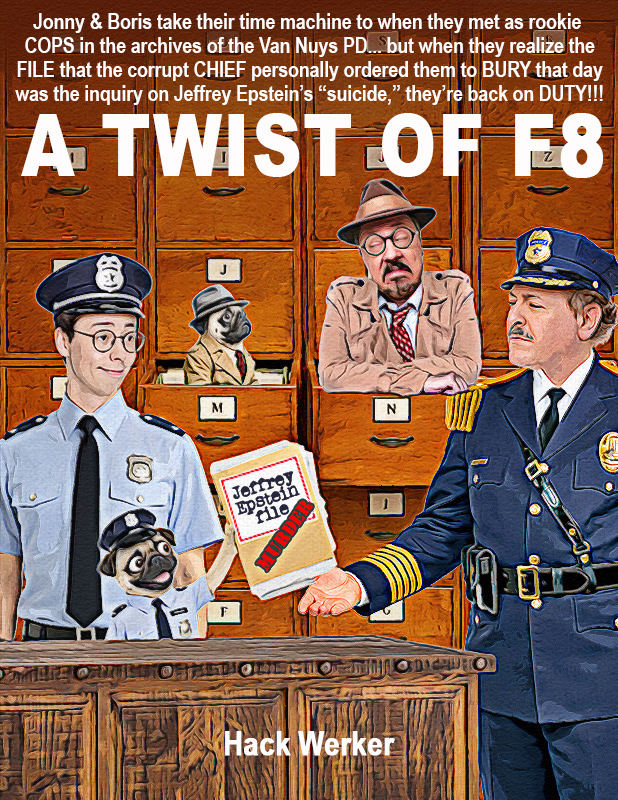
Eight years ago today, I drove to the customs area of Korea Airlines and picked up the little dude who would soon become my best friend. The good folks at Pug Rescue of Korea called him Bruce, but that was a handle I never cared for so I rechristened him Boris and we began a series of adventures that turned my new buddy into the legend he was always destined to become. Eight years later, my heart overflows with gratitude that fate (and the Pug Rescue of Korea) brought us together.
I told Hack that story and he cranked out this stupid novel. I guess it was a nice gesture.
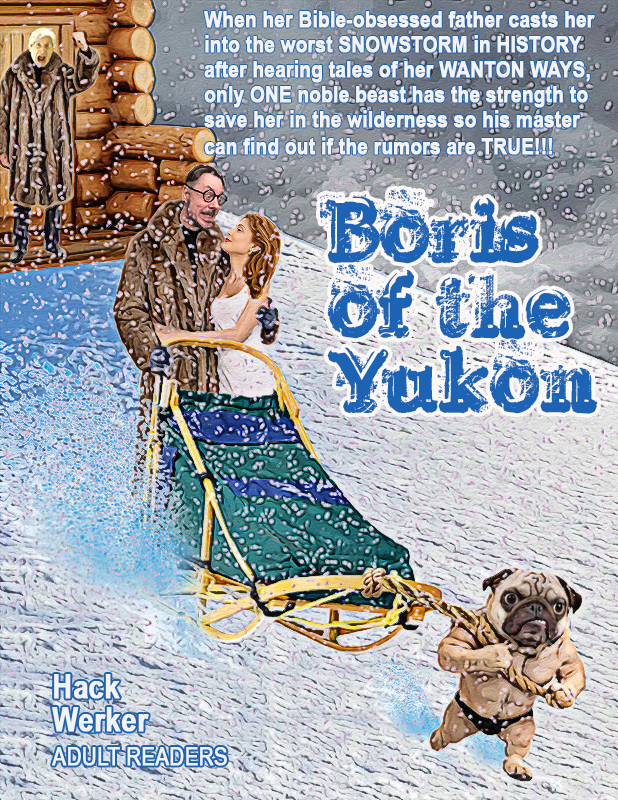
The snow came down like a bad alibi, thick and merciless, smothering the Alaskan night while old Merlin paced his cabin atop a hoard of gold, counting it and cursing the world. The fire cracked. His voice did too. “The Lord sees you,” he snarled, scripture dripping from his tongue. “He sees the men staring at you with lust in their hearts.”
Nancy—too alive for a dead place like this—smoothed the short white slip she wore and met his glare without blinking. “Who do you blame for that, Dad?” she said. “You dragged me into this frozen nowhere where the ratio’s five hundred men to one woman. If you ever looked up from praying, you’d see every guy within ten miles already thinking it.”
Merlin answered the way cowards do. He shoved her out into the storm, slammed the door, and let the lock speak for him. Snow soaked silk. Cold gnawed bone. Then, through the howling white, came the clean ring of sleigh bells—and out of the blur emerged a dog sled pulled by the one creature mean enough to laugh at a night like this. Boris of the Yukon was coming fast.
Happy Sled Dog Day!
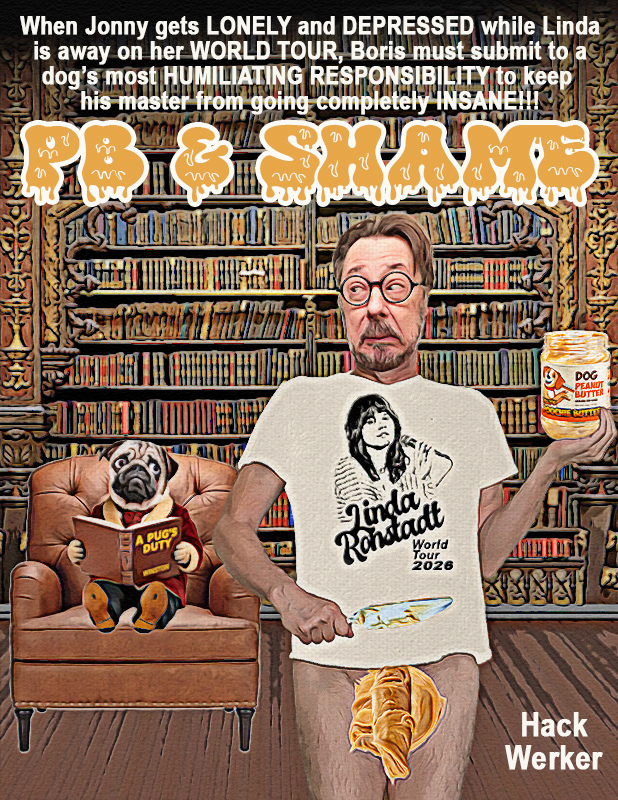
Happy National Peanut Butter Day!
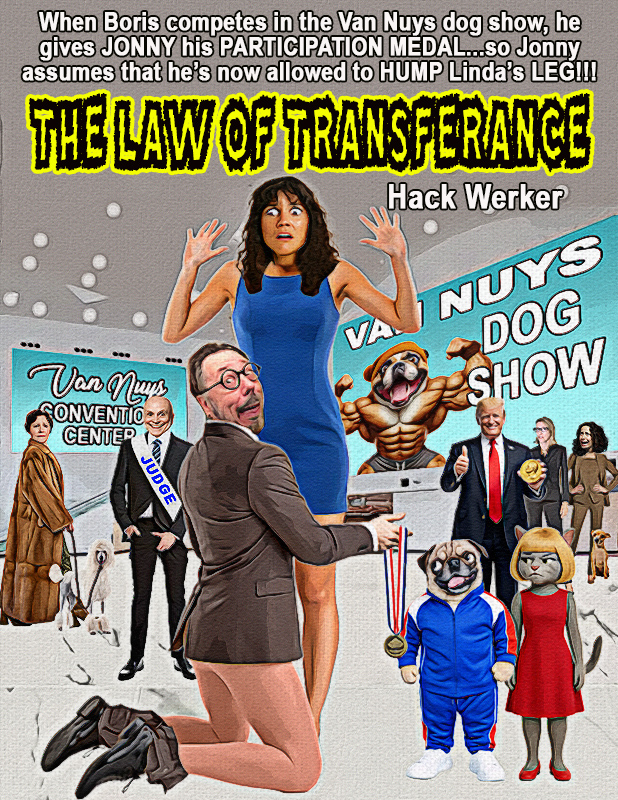
Hack wrote this novel after María Corina Machado gave Donald Trump the medallion and certificate she received for being named the 2025 Nobel Peace Prize winner in a transparent attempt to make her his puppet president of Venezuela. And while Hack clearly doesn’t comprehend the insignificance of someone winning a trophy and then giving it to another person who didn’t, it’s even more fucking obvious that Trump doesn’t either.
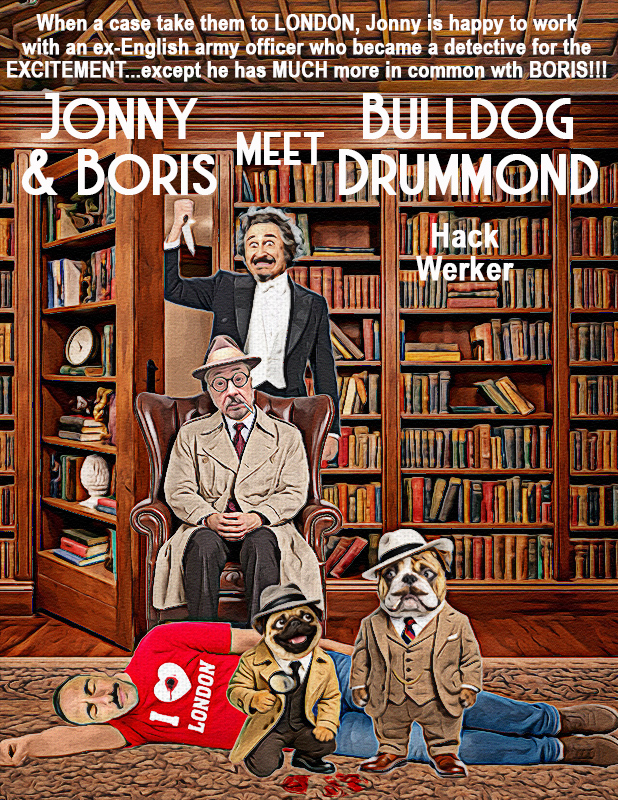
Jonny’s grin stayed plastered on his face as they crossed the threshold of Scotland Yard, but it had the stiffness of cheap glue. The murder of Robert Vestal still rang in his ears like a cracked bell—shot clean through the heart on some manicured English estate, a heart Jonny had always assumed Vestal rented rather than owned. The chief inspector, all tweed and clipped vowels, laid it out with the solemnity of a man announcing the weather: they’d be sharing the case with a local bloodhound named Drummond, who’d been tracking it from the English side of the pond. Jonny knew the name. Ex–army, thrill-seeker, a legend in rain-soaked pubs and police files. The constable leaned in and lowered his voice. “Good chap, Drummond. Made quite a name for himself in the canine corps.” Jonny blinked. “Did you just say CANINE corps?” The word hung in the air like gun smoke.
The answer padded in before the question could cool. Drummond entered without a sound, Limey incarnate, every inch the Empire right down to the jowls. He was a bulldog—no metaphor, no exaggeration, just a solid, breathing slab of British beef with a detective’s stare. His eyes locked on Boris and lit up. “Smashing to finally meet you, old boy. After years of chasing villains with homo sapiens, I thought it time we dogs showed them how it’s properly done. Care to see the murder scene?” He turned, already moving, a paw clamped around Boris’s arm. “Your assistant can take notes.” Jonny bristled as the pug was hustled away, the thrill draining out of the room. Scotland Yard suddenly felt colder, and Jonny had the sinking feeling this case wasn’t going to let him enjoy a single damn thing.
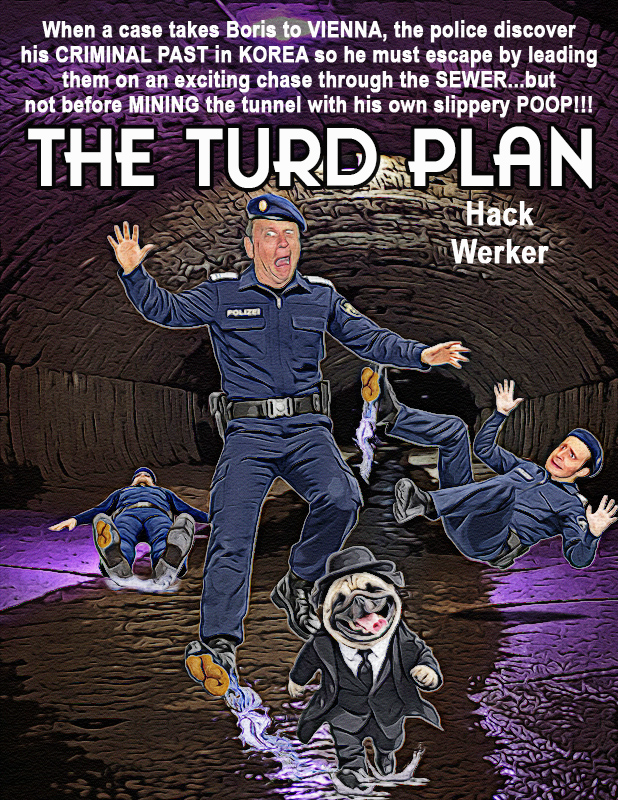
We end Hack Werker’s 2025 with this record-setting 333rd entry of the year, a birthday tribute to The Third Man director Sir Carol Reed. We invite you to join us on Facebook tomorrow to vote on the 10 nominees for the Hack Werker Novel of the Year.
Yeah, this won’t be one of them.