A joyous happy 99th birthday to the great William Daniels!
The website of the greatest pulp fiction writer who ever lived
A joyous happy 99th birthday to the great William Daniels!
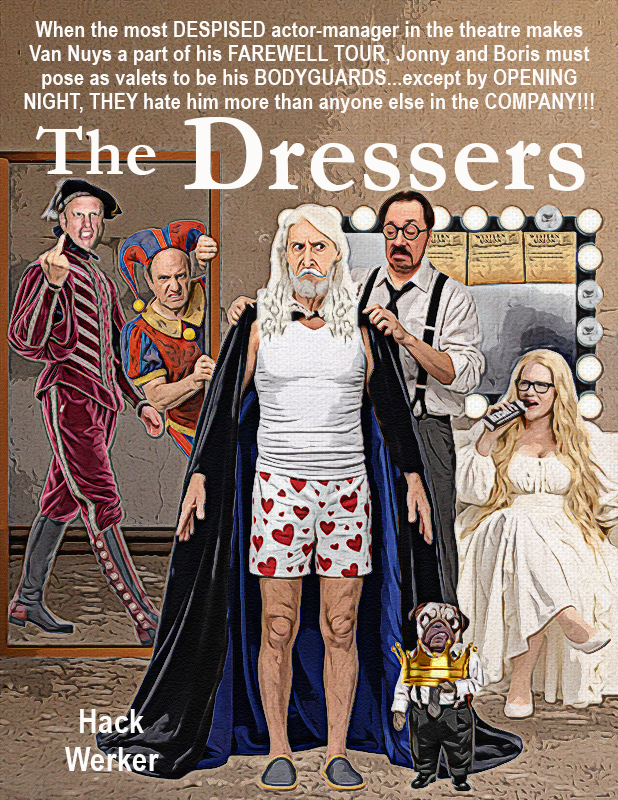
The highbrow crowd in Van Nuys—fur coats draped over hollow hearts—had already written Jehoshaphat Merlin’s obituary in permanent ink. Eighty-three years old, a bullet lodged in his skull, he’d gone down mid-soliloquy while playing Romeo like time had forgotten him. It should’ve been a perfect curtain call. But death took one look at Merlin and passed. The old tragedian clawed his way back, and when Jonny and Boris dragged his longtime dresser Robert Vestal, his would-be killer, to the noose, Merlin repaid the favor the only way he knew how—by announcing another farewell. King Lear, Van Nuys Performing Arts Center, World Theater Day. The faithful few came crawling back, clinging to the myth like it might still breathe.
Jonny and Boris didn’t trust the invitation, but they took it anyway. They figured maybe the old buzzard had discovered gratitude in his second life—maybe a handshake, maybe a couple of comp tickets if the planets lined up just right. Instead, they got Merlin in his dressing room, marinating in greasepaint and ego, wrapped in velvet like a relic that refused to stay buried. His voice rolled out in that baritone of his, stretching words until they nearly snapped. A “luminary” like him, he said, needed protection in a cesspool like Van Nuys. Since Vestal swung, he couldn’t keep a dresser longer than a fortnight. So he offered the detectives a job—valets and bodyguards, no extra pay, no gratitude, no illusions.
Boris gave it a moment, head tilted, the way he did when he was trying to find the upside in a bad deal. He said it might be worth a shot—two weeks in show business, keeping an eye on a company that had been taking potshots at its leading man all tour long. Merlin didn’t like the tone. Said he was a harsh master, the kind that broke men and called it discipline. Seventy years serving Shakespeare, and no one had ever met his standards. Then he lowered the boom, voice turning soft and deadly. He promised them one thing: after two weeks in his employ, the two miserable souls who despised him most in the entire company would be Jonny and Boris.
In Van Nuys, that wasn’t a warning. It was prophecy.

This romantic lark is a departure from Hack’s usual hardboiled style. It’s a memory piece loosely based on an episode during his brief stint with the Merchant Marines when he had a 24-hour pass in a strange city spent with three women he met on the dock. The reality was that they were sex workers who gave him his first case of syphilis that resulted in the insanity which plagued him in his later years, and the night concluded with the women stealing Hack’s wallet and pushing what they thought was his lifeless body into a canal. It ended happily, with the syphilis eating away the facts of the evening from his brain until he now regards it as one of his most cherished memories.
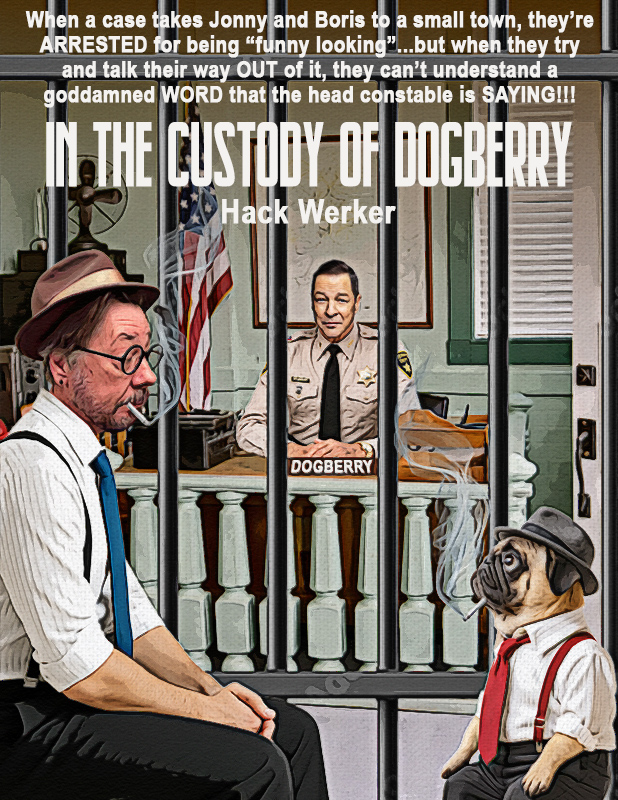
Jonny and Boris were excited when they learned that they’d have to travel to Messina to investigate the murder of Robert Vestal. But instead of a relaxing trip to Sicily, they’d be slugging it out in the backwaters of Messina, Alabama — a place where the humidity clung to your skin like a bad alibi and the locals looked at outsiders the way a junkyard dog looks at a mailman. Vestal’s murder had dragged them across the country, but the only thing getting slaughtered so far was their patience.
They’d barely set foot on George Wallace Boulevard when trouble clocked in. Jonny had been absent-mindedly giving Boris a bellyrub outside the diner — a perfectly innocent moment by Van Nuys standards — when a deputy named Verges with a badge too big for his brain wandered over. One look at their drivers’ licenses and the man’s eyes narrowed like a pair of cheap blinds.
“California, huh?” he muttered. “That may be the world capital of homosensitivity but perversion ain’t legal in these parts.”
Ten minutes later they were cooling their heels in a holding cell inside the sheriff’s office, labeled in chalk as Community Protection. The air smelled like old coffee and older grudges.
Sheriff Boscoe Z. Dogberry made his entrance like a man auditioning for a play he couldn’t read. He spoke in grand flourishes, dropping ten-syllable words where a simple grunt would’ve done the job. Illiterate maybe, but determined to sound like a dictionary that had swallowed a thesaurus.
Boris stepped forward first, all lab-coat dignity wrapped around a pair of fawn-colored paws. “Look, Sheriff,” he said, sliding a hundred-dollar bill between the bars like a peace offering. “I know it looks unusual — a human and a pug working together — but there’s no funny business. We both have girlfriends. I date an alley cat named Pussy, and Jonny is in a relationship with the 25 year-old version of rock star Linda Ronstadt. So you see that there’s nothing weird going on.”
Dogberry squinted at the bill as if it were a snake that might bite. “Pray thee, fellow, peace,” he declared. “I do not like thy look, I promise thee.”
Jonny sighed. The sheriff’s stilted speech sounded like it had been chewed up and spit out by a tractor. Boris glanced at Jonny, then added two more hundreds to the stack, crisp green confessions fluttering in the stale air.
“O villain!” Dogberry barked, puffing up like a rooster with delusions of grandeur. “Thou wilt be condemned into everlasting redemption for this!”
Jonny coughed to hide a laugh. Boris didn’t even try; the pug just fished out two more C-notes with a weary flick of his paw. Dogberry’s eyes gleamed. He snatched the money, unlocked the cell, and pocketed the evidence of his own moral flexibility. “If you’d coughed up that much at the beginning,” the sheriff said, straightening his crooked badge, “you could’ve saved all of us a lot of time. What do I look like, an ass?”
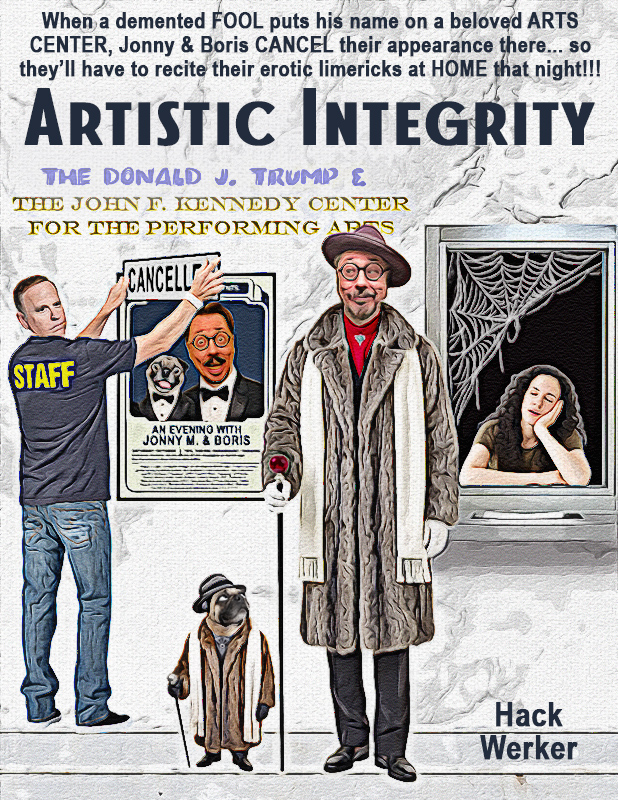
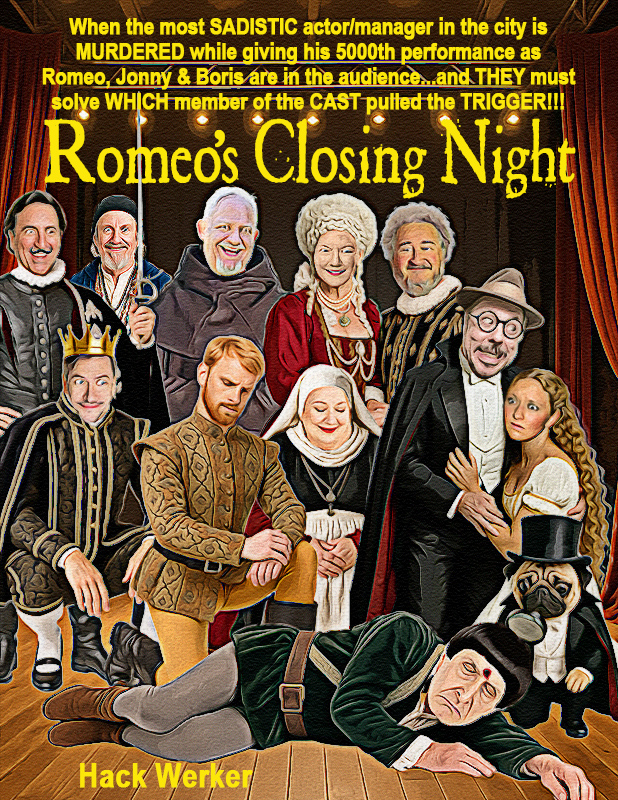
Actors’ Day in Van Nuys was supposed to be a harmless holiday—parades of washed-up thespians, discount makeup at the drugstore, and free coffee for anyone who could quote Hamlet without stumbling. Jonny M. and Boris the pug had finally scored something rarer than a fair fight in this town: a night off. They even had tickets—actual paid-for tickets—to see the legendary tragedian Jehoshaphat Merlin give his 5,000th performance as Romeo with his ramshackle traveling Shakespeare Company. Merlin was eighty-three if he was a day, with more wrinkles than a bulldog and a voice that shook like a cheap neon sign in the rain, but the crowd came anyway. Folks didn’t watch Merlin for Romeo—they watched him for the ham. And he served it thick, with gravy.
Juliet was played by the stunning blonde starlet Juliet Valentina, a woman so beautiful she made the moon look overpolished. Acting, however, was not one of her gifts. She couldn’t “cat her way out of a paper bag,” as the critics liked to say, but no one cared—as long as she kept glowing like she’d been dipped in stardust. The rest of the company tried to claw their way through the performance blind, because the only light on the stage was the follow-spot glued to old Merlin’s face. Everyone else lurked in total darkness, save for Valentina, who shimmered on her own like some celestial stage prop. It was the kind of theatrical disaster only Van Nuys could love.
Then the night cracked wide open. Merlin had just launched into one of Romeo’s longest soliloquies—something about love, death, or maybe indigestion—when a gunshot ripped through the auditorium. The old actor staggered, gasped, and collapsed in a heap of brocade and bravado. The stage went pitch black. A collective scream rose from the audience. Then, just as abruptly, the house lights snapped on and the curtain dropped like a guillotine. The theater manager trotted out, sweating like a sinner in church, and announced that the great Jehoshaphat Merlin was “indisposed,” the show was cancelled, and refunds were “not an option in these difficult financial times.”
But before the stunned audience could finish booing, a final message drifted from behind the curtain—Merlin’s voice, weak yet unmistakably theatrical, requesting, “If Jonny and Boris could please come backstage… to investigate an urgent matter.” It was the old showman’s last line, and he delivered it with all the pomp he had left. Jonny looked at Boris. Boris looked at Jonny. Actors’ Day had turned into murder night, and it looked like the Jonny & Boris Detective Agency was clocking back in.
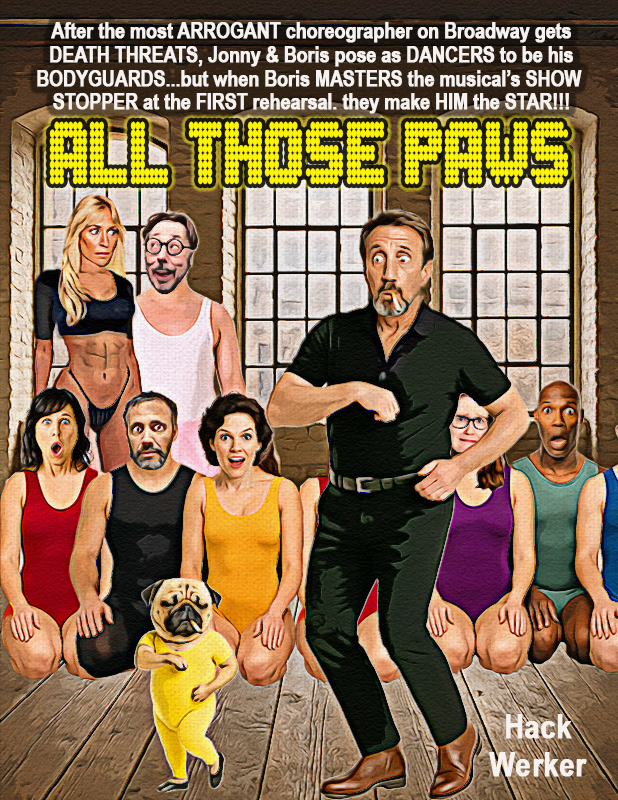
Happy heavenly birthday to the great Roy Scheider!
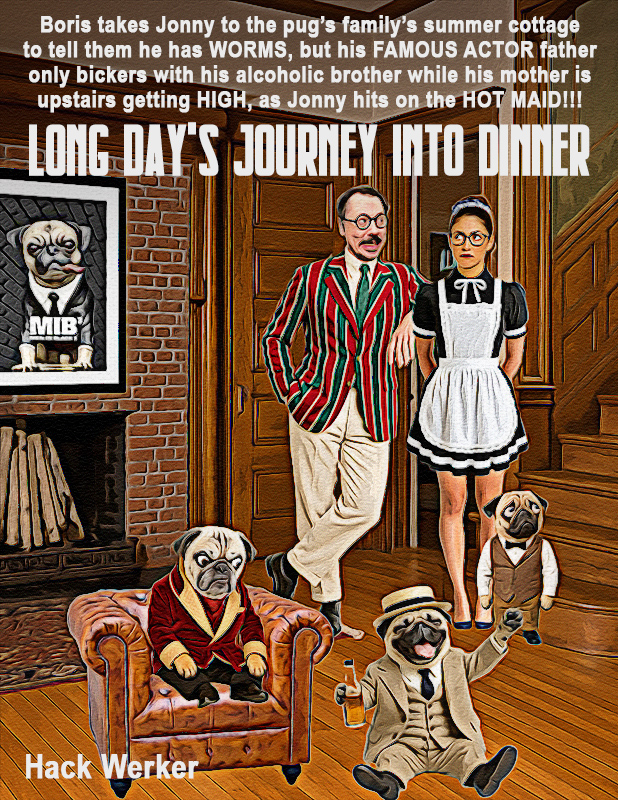
Happy heavenly birthday to the great Eugene O’Neill!
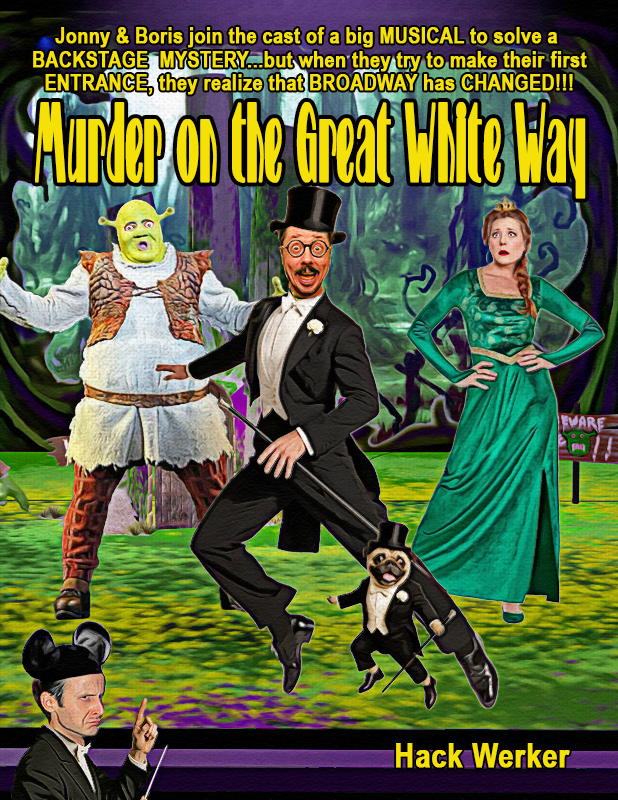
Happy Broadway Musicals Day!
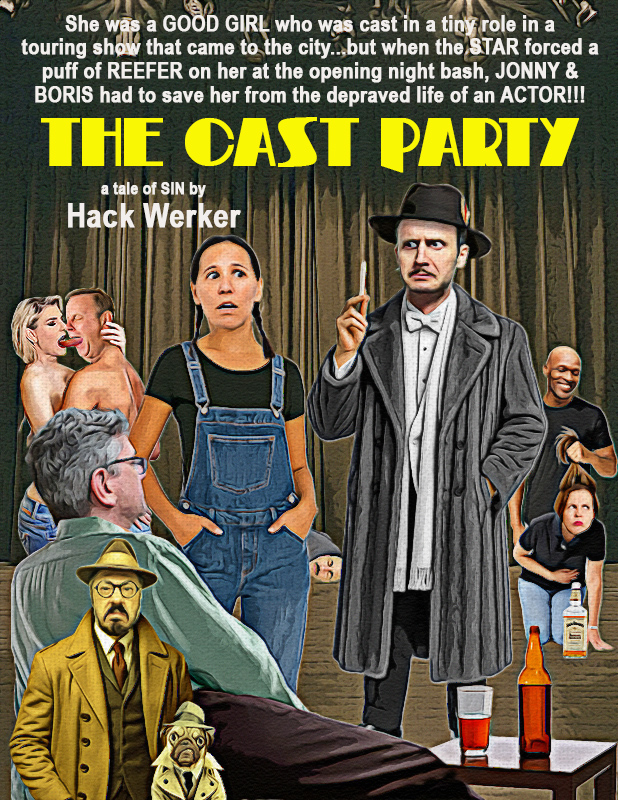
Happy National Actors Day!+